Cultural Night, Camel Safari & Stargazing: What to Expect at a Jaisalmer Desert Camp

Luxury Desert Camp in Jaisalmer: Experience Royal Comfort in the Thar Desert
October 24, 2026
Swiss Tent in Jaisalmer: Features, Comfort Level & Who Should Book One
October 24, 2026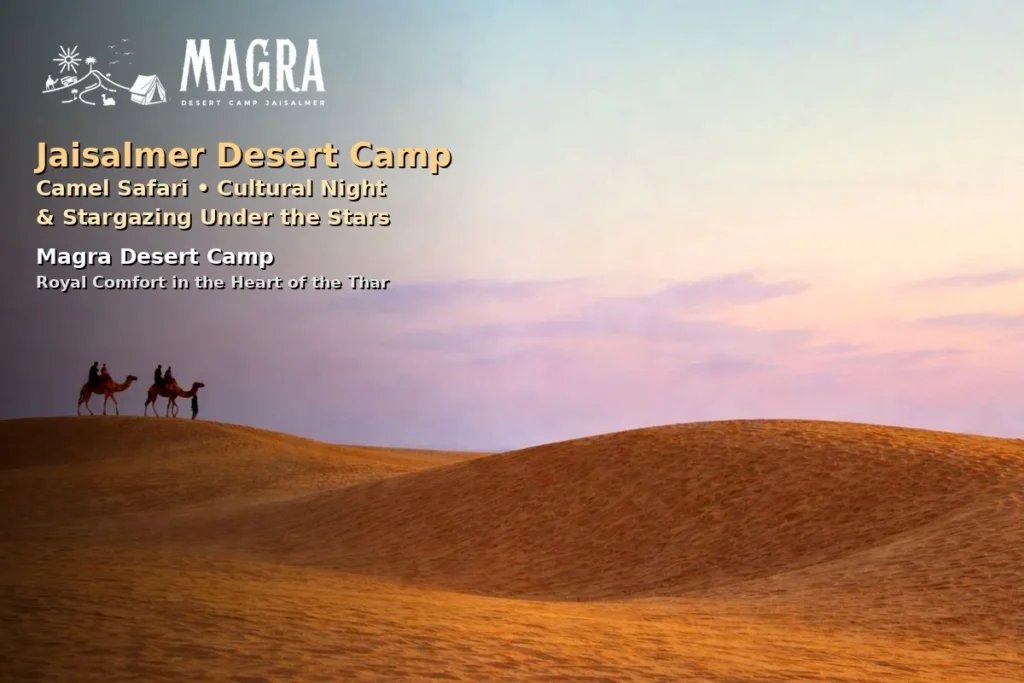
A night in the Thar Desert is unlike any other travel experience in India. When the sun sinks behind the golden dunes and the temperature drops, the desert transforms. The silence deepens, the stars appear in astonishing numbers, and the air fills with the sound of folk music and the soft pad of camel hooves on sand.
If you are planning a stay at a Jaisalmer Desert Camp, three experiences usually define the night: the cultural evening, the camel safari, and stargazing. Together they create the classic Rajasthan desert memory that travellers talk about for years.
At Magra Desert Camp, located near the Sam Sand Dunes, these three elements are thoughtfully combined with comfortable luxury tents, warm hospitality, and authentic Rajasthani hospitality. Here is exactly what you can expect when you spend a night under the Thar sky.
The Classic Jaisalmer Desert Camp Experience
Most visitors reach their desert camp in the late afternoon. After a traditional welcome with aarti, tikka, and a cool drink, you settle into your tent and step out to watch the light change across the dunes. As evening approaches, the three signature experiences begin to unfold.
Why These Three Experiences Matter
A good Jaisalmer Desert Camp does more than provide a place to sleep. It stages the desert for you. The camel safari connects you to the landscape. The cultural night connects you to Rajasthan’s living traditions. Stargazing connects you to the vastness of the open sky. When done well, the three flow into one seamless evening.
Camel Safari: Riding into the Golden Hour
The camel safari is usually the first highlight of the evening and one of the most photographed moments of any trip to Jaisalmer.
What the Safari Feels Like
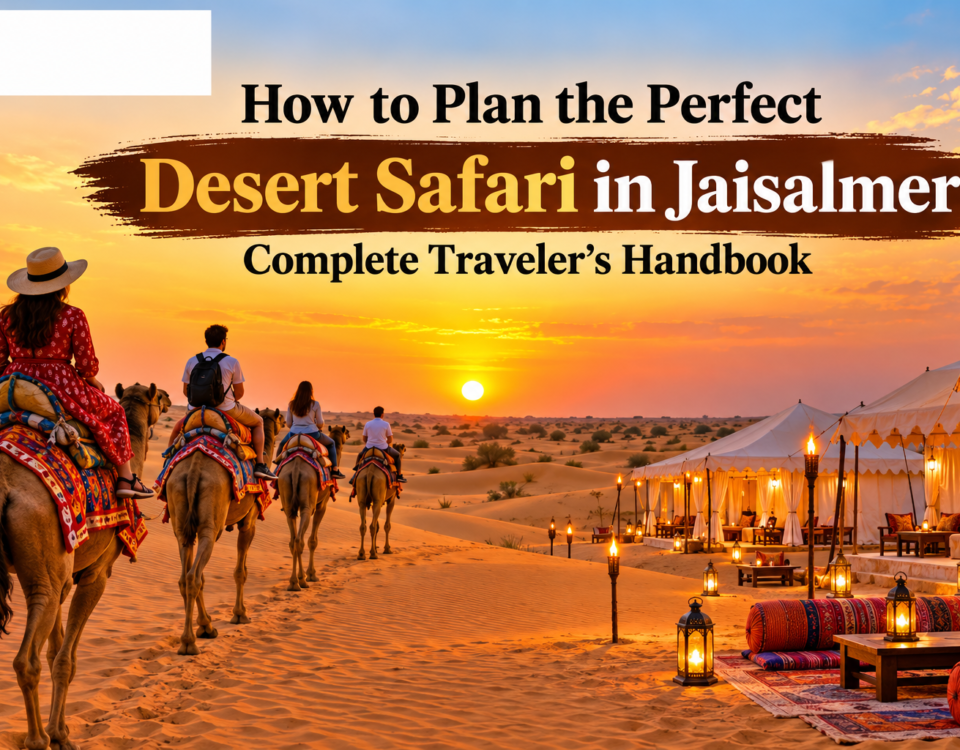
You mount a well-trained camel and set off across the undulating dunes. The pace is slow and rhythmic. As the sun lowers, the sand turns from pale gold to deep orange and then soft pink. The shadows of the dunes grow longer. From the height of the camel you see the camp tents glowing in the distance and the endless stretch of the Thar ahead.
Most safaris last 30–45 minutes and are timed to catch the best light. Guides usually stop at a high dune so guests can dismount, walk a little, and take photographs. The silence at that moment is profound — only the wind and the occasional call of a bird break it.
Tips for a Comfortable Camel Ride
- Wear comfortable, modest clothing that covers your legs.
- Ask for a double saddle if you prefer more stability.
- Keep your phone or camera secured; the movement of the camel can be surprising at first.
- Listen to your guide — they know the safest paths and the prettiest viewpoints.
At Magra Desert Camp the camel safari is arranged so that you return just as the cultural programme is about to begin, creating a natural transition from adventure to evening entertainment.
Cultural Night: Folk Music, Dance & Desert Hospitality
Once the camels are led away and the sky darkens, the cultural evening takes centre stage. This is the heart of the social experience at a traditional Jaisalmer Desert Camp.
What Happens During the Cultural Programme
A stage or open performance area is set up near the dining space or around the bonfire. Local artists perform classical and folk forms that have been part of Rajasthan’s desert culture for generations:
- Kalbelia dance — the sinuous, energetic dance of the Kalbelia community, often called the “snake dance.”
- Ghoomar — the graceful circular dance traditionally performed by women.
- Live music on instruments such as the algoza, morchang, and dholak, accompanied by soulful Rajasthani folk songs.
- Sometimes puppet shows or fire performances are added for extra colour.
The atmosphere is warm and participatory. Guests are often invited to join the dancers for a few steps, creating laughter and memorable photographs. The performance usually lasts 45–60 minutes and ends just as dinner is served.
The Bonfire and Shared Dinner
After the show, most camps light a bonfire. Guests gather around it with cups of hot chai or traditional drinks while the staff serve a Rajasthani thali. Expect dal baati churma, gatte ki sabzi, ker sangri, soft rotis, and sweet options. Eating under the open sky with the sound of residual folk music still in the air is one of the most satisfying parts of the night.
At Magra Desert Camp the cultural evening is kept intimate rather than overly commercial, so the focus stays on genuine performance and hospitality rather than loud recorded music.
Stargazing: The Desert Sky After Dark
When the cultural programme ends and the bonfire settles into glowing embers, the final magic of the night begins. The Thar Desert has some of the clearest night skies in India because of low light pollution.
What You Will See
On a clear night the Milky Way can be visible as a soft river of light. Constellations stand out sharply. Occasional shooting stars streak across the darkness. The silence is almost complete except for the soft crackle of the fire and the distant sound of camels settling for the night.
Many guests simply lie back on charpais or sit on the sand and look up. Some camps provide basic star charts or a guide who can point out major constellations. Even without any equipment, the sheer number of stars is overwhelming for first-time desert visitors.
Best Conditions for Stargazing
- New moon or early lunar phase nights offer the darkest skies.
- Winter months (November to February) usually bring the clearest air.
- Avoid nights with heavy cloud cover or strong dust storms.
Magra Desert Camp’s location near the dunes keeps artificial light to a minimum, giving guests a strong chance of a memorable stargazing session.
A Typical Evening Timeline at Magra Desert Camp
Here is how the three experiences usually flow together:
| Time | Activity |
|---|---|
| 4:00–5:00 pm | Arrival & traditional welcome |
| 5:00–5:30 pm | Settle into luxury tents |
| 5:30–6:30 pm | Camel safari at sunset |
| 6:45–7:45 pm | Cultural night (folk music & dance) |
| 8:00 pm | Bonfire & Rajasthani dinner |
| 9:00 pm onwards | Stargazing & quiet desert time |
This sequence allows each experience to breathe without feeling rushed.
Practical Tips for Your Jaisalmer Desert Camp Night
- What to pack: Light jacket or shawl (desert nights are cool), comfortable closed shoes for the safari, sunscreen and hat for the afternoon, power bank, and a torch.
- Clothing: Modest, breathable clothes during the day; something slightly warmer for the evening.
- Photography: Sunset and the cultural performance offer the best light. For stars, use a tripod or rest your phone on a steady surface and use night mode.
- Children & elderly guests: Camel rides can be arranged with extra care; the cultural evening is usually family-friendly.
- Booking: Confirm whether the camel safari, cultural programme, dinner, and breakfast are included in your package at Magra Desert Camp.
Why Magra Desert Camp Delivers These Experiences Well
A Jaisalmer Desert Camp can vary widely in quality. Some focus only on the party atmosphere; others feel sparse. Magra Desert Camp aims for balance: comfortable air-conditioned or well-ventilated luxury tents with private bathrooms, genuine local performers, carefully timed safaris, and a setting that still feels like the real desert rather than a crowded tourist zone.
The combination of a proper cultural night, a scenic camel safari, and genuine stargazing opportunity is what turns a simple overnight stay into a complete desert experience.
Final Thoughts
Cultural night, camel safari, and stargazing are the three pillars of a classic night at a Jaisalmer Desert Camp. When they are executed with care — good timing, respectful artists, comfortable facilities, and a beautiful location — they create one of the most memorable travel experiences Rajasthan has to offer.
If you want to enjoy all three in a setting that values both comfort and authenticity, Magra Desert Camp near the Sam Sand Dunes is designed for exactly that. Arrive in the afternoon, ride into the sunset, watch the folk dancers, and then look up at a sky full of stars. That is the desert night you will remember.
Frequently Asked Questions (FAQs)
1. What time does the cultural night usually start at a Jaisalmer Desert Camp?
Most camps, including Magra Desert Camp, begin the folk music and dance programme around 6:45–7:00 pm, shortly after the camel safari returns and just before dinner is served.
2. Is the camel safari suitable for beginners and children?
Yes. The camels used at reputable camps are trained for tourism and walk at a steady, gentle pace. Children can usually ride with an adult or on a specially arranged safer saddle. Always inform the camp in advance about ages and any concerns.
3. Can I really see the Milky Way while stargazing at a desert camp?
On clear, moonless or low-moon nights, yes. The low light pollution around the Sam Sand Dunes area makes the Milky Way and many constellations visible to the naked eye, especially between November and February.
4. Are cultural performances and camel safari included in the stay package at Magra Desert Camp?
Most standard packages at Magra Desert Camp include the camel safari, cultural evening, bonfire, dinner, and breakfast. It is always best to confirm the exact inclusions when you book.
5. What should I wear for the evening cultural night and stargazing?
Wear comfortable, modest clothing and carry a light jacket or shawl. Desert temperatures drop quickly after sunset. Closed shoes are better for walking on sand than open sandals.