Gadisar Lake Jaisalmer: History, Boating, Timings & the Complete Visitor Guide (2026)

Bada Bagh Jaisalmer: History, Timings, Entry Fee, Distance & Complete Visitor Guide
July 9, 2026
Jaisalmer War Museum: A Tribute to India’s Brave Soldiers
August 3, 2026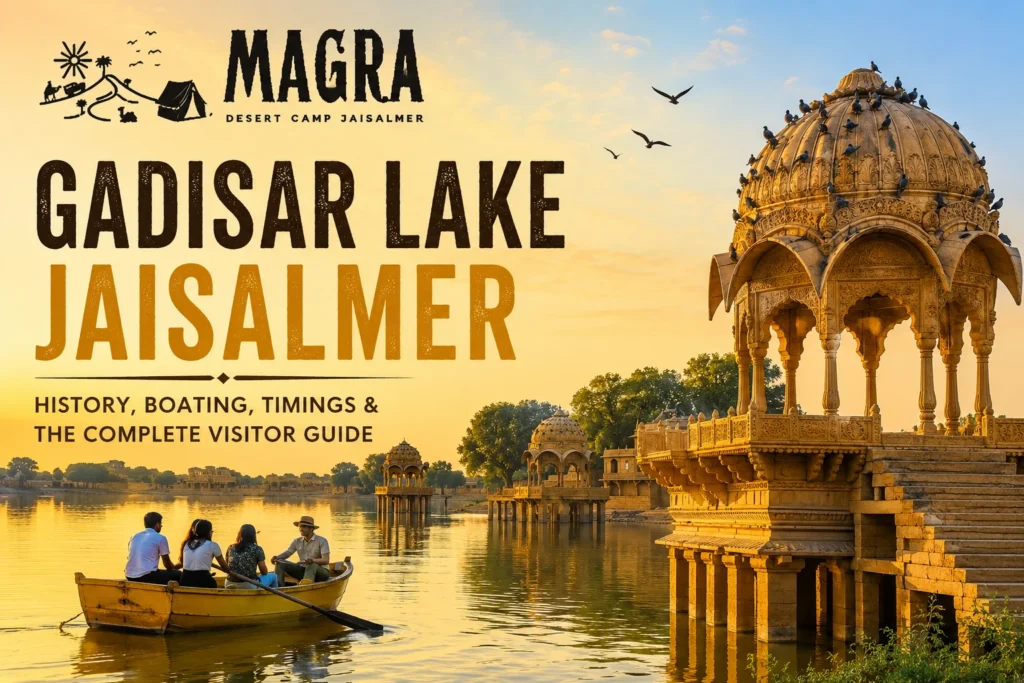
When people think of Jaisalmer, the first images that come to mind are the Golden Fort and endless sand dunes. Yet, one place has quietly remained at the heart of the city’s history for centuries: Gadisar Lake Jaisalmer. More than just a scenic attraction, this historic reservoir once supplied drinking water to the entire city and continues to be one of the most peaceful places to experience Jaisalmer’s heritage.
Whether you are planning a family holiday, a photography tour, or a desert adventure, a visit to Gadisar Lake offers a different perspective of the Golden City. Its calm waters, beautifully carved gateways, temples, and migratory birds create an experience that blends history, architecture, and nature in one destination.
What Makes Gadisar Lake Different from Other Lakes?
Unlike many lakes built for recreation, Gadisar Lake was originally created as a lifeline for Jaisalmer. Built in the 14th century by Maharawal Gadsi Singh, the lake collected rainwater and supplied it to residents long before modern pipelines existed. Every drop stored here was valuable in the harsh climate of the Thar Desert.
Today, visitors admire its beauty, but its greatest significance lies in the remarkable engineering that helped an entire city survive in one of India’s driest regions. This historical purpose makes it one of the most meaningful lakes in Jaisalmer.
If you enjoy learning about the city’s heritage, you can also explore these interesting facts about Jaisalmer, which reveal many lesser-known stories about the Golden City.
Gadisar, Ghadsisar, Gadsisar or Gadi Sagar: Are They the Same?
Many travelers become confused after seeing different names online, including Ghadsisar, Gadsisar, Gadi Sagar Lake, and Gadisar. These names all refer to the same historic lake.
The variations exist because of differences in pronunciation, local dialects, and transliteration from Hindi to English. Locals commonly pronounce the name as “Ghadsisar,” while official tourism websites often use “Gadisar Lake.”
Ghadsisar Meaning in Hindi
The name comes from Maharawal Gadsi Singh, the ruler responsible for constructing the reservoir. Over time, “Gadsi Sar” evolved into “Ghadsisar” and later became popularly written as Gadisar Lake. The word “Sar” in Rajasthan traditionally refers to a lake or water body.
The Story Behind Gadisar Lake
In the 1300s, water was the most precious resource in Jaisalmer. Instead of depending solely on wells, Maharawal Gadsi Singh commissioned a large rainwater harvesting reservoir that would support the growing population.
For generations, this lake served as the city’s primary source of drinking water. The surrounding temples, shrines, chhatris, and pavilions were added over time by wealthy merchants and royal families, transforming the reservoir into both a practical and spiritual landmark.
Even today, standing beside the lake reminds visitors how intelligent water conservation shaped life in the desert centuries before modern technology.
Tilon Ki Pol: The Gateway That Welcomes Every Visitor
Before reaching the lake, visitors pass through the beautifully carved Tilon Ki Pol, one of Jaisalmer’s most photographed entrances.
According to local folklore, the gateway was built by a royal courtesan named Tilon. Some nobles opposed its construction because of her social status, but she cleverly added a temple at the top of the gate, preventing anyone from demolishing it.
Whether the legend is entirely true or not, the gateway remains one of the finest examples of Jaisalmer’s sandstone craftsmanship.
Things to Do at Gadisar Lake
Enjoy a Peaceful Boat Ride
Boating is one of the most popular activities at Gadi Sagar Lake. Paddle boats and rowboats allow visitors to admire the temples, pavilions, and reflections of golden sandstone structures from the water.
The experience is especially beautiful during the early morning and just before sunset.
Watch Migratory Birds
During winter, many migratory birds arrive at the lake, making it an attractive spot for bird lovers. Herons, kingfishers, cranes, ducks, and several seasonal species can often be seen around the water.
If you are interested in wildlife photography, winter mornings provide the best opportunities.
Capture the Golden Hour
Photographers love Gadisar Jaisalmer because the yellow sandstone structures reflect beautifully on the lake during sunrise and sunset. The changing light creates stunning mirror-like reflections that are difficult to find elsewhere in Rajasthan.
Explore the Temples
Several small temples surrounding the lake continue to attract devotees and visitors. Their peaceful atmosphere offers a welcome contrast to the busy streets near Jaisalmer Fort.
Gadisar Lake Timings and Entry Fee
One of the best parts about visiting Gadisar Lake Jaisalmer is that the lake is accessible throughout the day.
General Timings: Around 8:00 AM to 7:00 PM
Entry Fee: No entry fee for visiting the lake.
Boating Charges: Separate charges apply depending on the type of boat selected.
Since timings and boating fees may change seasonally, it is always advisable to confirm the latest information before your visit.
Best Time to Visit Gadisar Lake
Although the lake remains open throughout the year, the visitor experience changes with the seasons.
October to March is considered the ideal period because temperatures remain pleasant and migratory birds arrive during winter.
Early mornings provide cooler weather, fewer crowds, and excellent lighting for photography. Evenings are equally popular, especially when the sunset colours reflect across the water.
How to Reach Gadisar Lake
The lake is conveniently located only a short distance from Jaisalmer Fort.
Approximate distances:
- Jaisalmer Fort: 1 km
- Railway Station: 2 km
- Bus Stand: 2 km
- Sam Sand Dunes: Around 40 km
Auto-rickshaws, taxis, rental bikes, and even walking are convenient options for reaching the lake from the city centre.
Nearby Attractions Worth Exploring
Many travelers combine Gadsisar Lake with other famous attractions in a single day.
Popular nearby places include:
- Jaisalmer Fort
- Patwon Ki Haveli
- Nathmal Ki Haveli
- Salim Singh Ki Haveli
- Vyas Chhatri
- Local handicraft markets
This route allows visitors to experience both the historical and cultural side of Jaisalmer before heading toward the desert in the evening.
Continue Your Journey to the Thar Desert
A visit to Gadisar Lake offers a glimpse into Jaisalmer’s history, but the city’s identity is equally connected to its vast desert landscapes.
Many travelers spend the morning exploring historical attractions before driving to Sam Sand Dunes for sunset camel rides, jeep safaris, folk performances, and traditional Rajasthani cuisine.
For those looking for a comfortable stay in the desert, Deluxe Tent accommodation provides modern comforts while allowing guests to enjoy an authentic desert experience. Staying overnight lets you witness cultural performances beneath the stars and experience the peaceful beauty of the Thar after sunset.
You can also explore the complete range of experiences offered by Magra Desert Camp, making it easy to combine Jaisalmer’s historical attractions with an unforgettable desert adventure.
Local Travel Tips
To make the most of your visit:
- Arrive before 9 AM for peaceful surroundings.
- Carry drinking water during warmer months.
- Wear comfortable walking shoes.
- Keep your camera ready for sunrise and sunset reflections.
- Respect the temples and religious sites around the lake.
- Allocate around 1 to 2 hours to explore the area comfortably.
Frequently Asked Questions
Is Gadisar Lake worth visiting?
Yes. It is one of Jaisalmer’s most important historical landmarks and offers boating, birdwatching, photography, and impressive architecture.
Why is Gadisar Lake famous?
The lake is famous for its history as Jaisalmer’s primary water reservoir, beautiful sandstone architecture, Tilon Ki Pol, and peaceful surroundings.
Is Gadisar Lake and Gadi Sagar Lake the same?
Yes. Gadisar Lake, Gadi Sagar Lake, Ghadsisar, and Gadsisar all refer to the same historic reservoir in Jaisalmer.
How much time should I spend at Gadisar Lake?
Most visitors spend between one and two hours enjoying boating, photography, and exploring the temples.
What is the best time to visit?
The winter season, from October to March, offers the most comfortable weather. Sunrise and sunset are considered the best times of the day for visiting.
Final Thoughts
While Jaisalmer is often celebrated for its magnificent fort and sweeping sand dunes, Gadisar Lake Jaisalmer tells the story of how the city survived and flourished in the middle of the desert. Every temple, pavilion, and reflection on its calm waters represents centuries of history, culture, and remarkable water management.
If you are planning a trip to the Golden City, don’t limit yourself to famous monuments alone. Begin your day at Gadisar Lake, explore Jaisalmer’s rich heritage, and end it amid the golden dunes of the Thar. Together, these experiences capture the true spirit of Jaisalmer and create memories that stay with you long after your journey ends.